4 quick signals to understand the week
If you only read one section, read this
DOnot just answer
AI is starting to work on tasks, not only talk about them
The important change is simple: instead of only answering a question, an AI system can be given a job inside software and carry out several steps — while people still define permissions, limits and checks.
69Bmolecules searched
AI can search for promising medicine candidates at a scale humans cannot
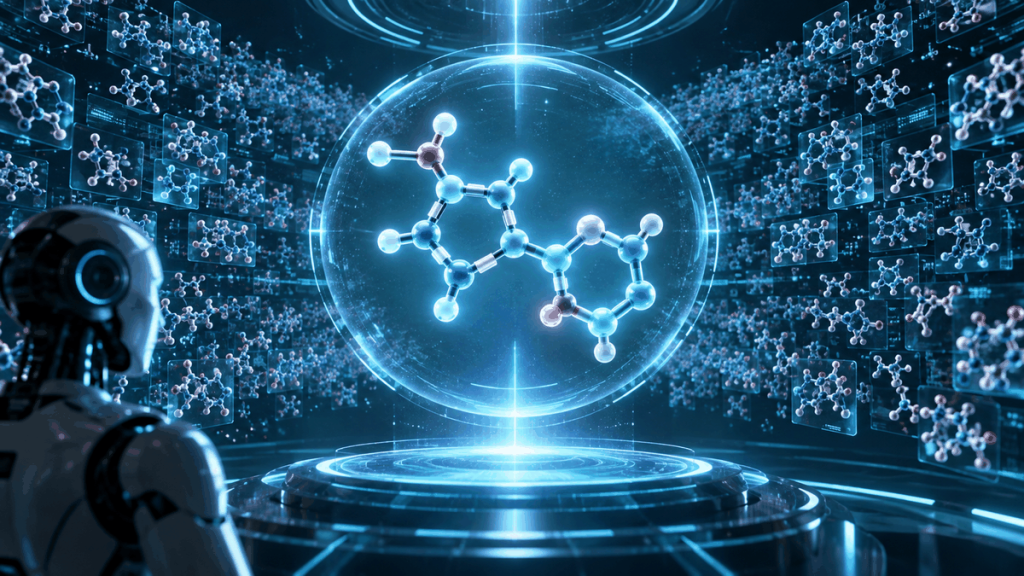
Researchers used a system to search a prepared space of roughly 69 billion drug-like molecules and then tested selected candidates in the lab. That can make early discovery faster — but it does not mean a finished medicine already exists.
1.5°Cplanning reality
Climate planning is preparing for a temporary overshoot
The planning question is changing from only “Can we stay below 1.5°C?” to also “If we go above it, how high, for how long, and how quickly can we bring temperatures back down?”
What happened — and why a normal person should care
AI that can do tasks for you
The shift is from “give me an answer” to “help carry out this task.” The new challenge is deciding what the AI is allowed to do and checking what it did.
A new idea about how the brain may coordinate thinking
Scientists are exploring whether traveling brain waves may help different parts of the brain coordinate information. Interesting idea — but it is still a theory, not a solved explanation of consciousness.
Using AI to look for possible medicines
Instead of testing possibilities one by one, computers can narrow an enormous search space and send the most promising candidates to the lab. It speeds up the search; it does not skip safety testing.
No big anti-aging breakthrough this week
Sometimes the useful conclusion is “nothing changed enough to rewrite the story.” The field is active, but this week did not produce evidence strong enough for a breakthrough headline.
Moving more information from the brain to a computer
Brain implants can create a lot of data. A major practical problem is moving that data quickly without using too much power or creating too much heat. This research attacks that bottleneck.
Reliable electricity matters as much as cheap electricity
Having lots of energy is not enough if it is unavailable when demand spikes. This week’s signal is about reliable, around-the-clock power and growing institutional interest in geothermal energy.
Planning for a world that may temporarily pass 1.5°C
Climate planning is becoming more practical: reduce warming as much as possible, prepare for a temporary overshoot, shorten it, adapt to impacts and keep a path for temperatures to decline later.
Quantum computers are improving, but the practical security work starts now
Researchers are getting better at controlling complex quantum systems. That does not mean today’s computers are obsolete. The near-term business task is preparing encryption for a future quantum threat.
Antibiotic resistance still needs systems, not only new drugs
This week was more about how countries organize prevention, access, sanitation and surveillance than about a new antibiotic breakthrough.
Robots that remember instead of starting from zero
A useful robot should remember where things are and use past experience later. This research moves robots toward persistent memory of their physical environment.
Technology is learning to act, not just answer
Across several fields, the same pattern appears: observe something → decide what to do → act → check the result → correct. The technical idea behind this is often described as bounded or closed-loop action: the system can do something, but inside rules and with measurement and correction.
Three topics worth teaching to a general audience
AI that can act
From Assistant to Delegated Agent
AI searching for medicines
Searching 69 Billion Molecules
Climate after 1.5°C
Understanding the Overshoot Era
🧪 How to read this report: a “strong signal” means the evidence is worth paying attention to — not that the technology is finished, safe, cheap or ready for everyone. When the evidence is weak, the report says WATCH instead of inventing a breakthrough.